Dengue fever is a mosquito-borne viral infection that can cause high fever, severe headache, body aches, nausea, vomiting and skin rash. While many dengue infections are mild and improve with supportive care, some patients can develop severe dengue, which may become life-threatening without timely medical attention.
Dengue remains an important public-health concern in Pakistan, particularly in areas where warm weather, rainfall and standing water provide suitable conditions for Aedes mosquitoes. Pakistan’s National Institutes of Health (NIH) continues to provide dengue prevention and health-education guidance for the public.
This guide explains the dengue fever symptoms and prevention measures everyone should know, including warning signs, home precautions and when to seek medical help.
What Is Dengue Fever?
Dengue is a viral infection transmitted primarily through the bite of infected Aedes mosquitoes. There are four closely related dengue virus serotypes: DENV-1, DENV-2, DENV-3 and DENV-4.
The mosquitoes that spread dengue commonly live around homes and can breed in containers holding stagnant water. Unlike mosquitoes that primarily bite at night, Aedes mosquitoes can be active during the daytime as well.
Dengue is not normally spread through casual person-to-person contact. The main route of transmission is through the bite of an infected mosquito.
How Does Dengue Spread?
The transmission cycle generally works like this:
- An Aedes mosquito bites a person who has dengue virus in their blood.
- The mosquito becomes infected.
- The infected mosquito bites another person.
- The virus enters the second person’s bloodstream.
Because mosquitoes can become infected by biting a dengue patient, preventing mosquito bites is especially important when someone in the household has dengue.
WHO recommends reducing mosquito exposure and eliminating mosquito breeding sites around homes.
Common Symptoms of Dengue Fever
Dengue symptoms usually begin several days after an infected mosquito bite. WHO reports that symptoms may appear around 4–10 days after infection.
Common symptoms include:
- High fever
- Severe headache
- Pain behind the eyes
- Muscle and joint pain
- Body aches
- Nausea
- Vomiting
- Skin rash
- Fatigue or weakness
- Loss of appetite
Pakistan’s NIH also identifies sudden high fever, severe headache, pain behind the eyes, joint and muscle pain, nausea, vomiting and rash among common dengue symptoms.
Because these symptoms can resemble other viral illnesses, a person with suspected dengue should consult a healthcare professional rather than relying only on symptoms to determine the diagnosis.
Dengue Warning Signs You Should Never Ignore
Most dengue infections do not become severe, but some patients can deteriorate quickly.
Warning signs of severe dengue include:
- Severe abdominal pain or tenderness
- Persistent vomiting
- Bleeding from the nose or gums
- Blood in vomit or stool
- Unusual bruising or bleeding
- Rapid or difficult breathing
- Extreme weakness or fatigue
- Restlessness or confusion
- Cold or clammy skin
- Signs of shock
Pakistan’s NIH specifically highlights severe abdominal pain, persistent vomiting, bleeding, vomiting blood or blood in stool, rapid breathing and extreme fatigue, restlessness or confusion as warning signs requiring urgent medical attention.
Important: The Fever Going Down Does Not Always Mean Recovery
One of the most important things families should understand is that a patient may enter a critical phase around the time the fever starts to decrease.
According to Pakistan’s NIH, the critical phase commonly occurs around 3–7 days after symptoms begin, when some patients can suddenly develop severe dengue.
Therefore, if the fever decreases but the patient develops abdominal pain, repeated vomiting, bleeding, breathing difficulty, severe weakness or confusion, medical attention should be sought immediately.
What Should You Do If You Suspect Dengue?
If you or a family member develops a high fever with symptoms that could indicate dengue:
1. Contact a Healthcare Professional
Get medical advice, particularly if the fever is high, persistent or accompanied by severe symptoms.
A healthcare professional may recommend appropriate blood testing depending on the stage of illness and clinical situation.
2. Stay Hydrated
Adequate fluid intake is important during febrile illness. Follow your healthcare professional’s advice regarding fluids, especially if there is vomiting or difficulty drinking.
3. Monitor Symptoms Carefully
Keep track of:
- Temperature
- Fluid intake
- Vomiting
- Urination
- Bleeding
- Abdominal pain
- Breathing difficulties
- Changes in alertness or behavior
If warning signs appear, do not wait for the illness to improve at home.
4. Prevent Mosquito Bites
A person with dengue can contribute to the transmission cycle if mosquitoes bite them and subsequently bite other people. Protecting the patient from mosquito bites is therefore important.
Dengue Treatment: What You Should Know
There is currently no specific antiviral treatment that cures dengue infection. Treatment mainly focuses on supportive care and monitoring for complications. WHO states that dengue symptoms can be managed and that appropriate clinical management can greatly reduce deaths from severe dengue.
Do not start medicines on your own simply because someone in the family has dengue.
For fever and pain, healthcare professionals may recommend appropriate medicines. CDC guidance identifies acetaminophen/paracetamol as an option for managing fever and body pain, while patients should follow medical advice regarding medication use.
Avoid Self-Medicating With Aspirin or Ibuprofen
Because dengue can involve bleeding, patients should not casually use medicines such as aspirin or ibuprofen without medical advice.
Ask a doctor or qualified healthcare professional which medicine is appropriate for fever and pain.
How to Prevent Dengue at Home
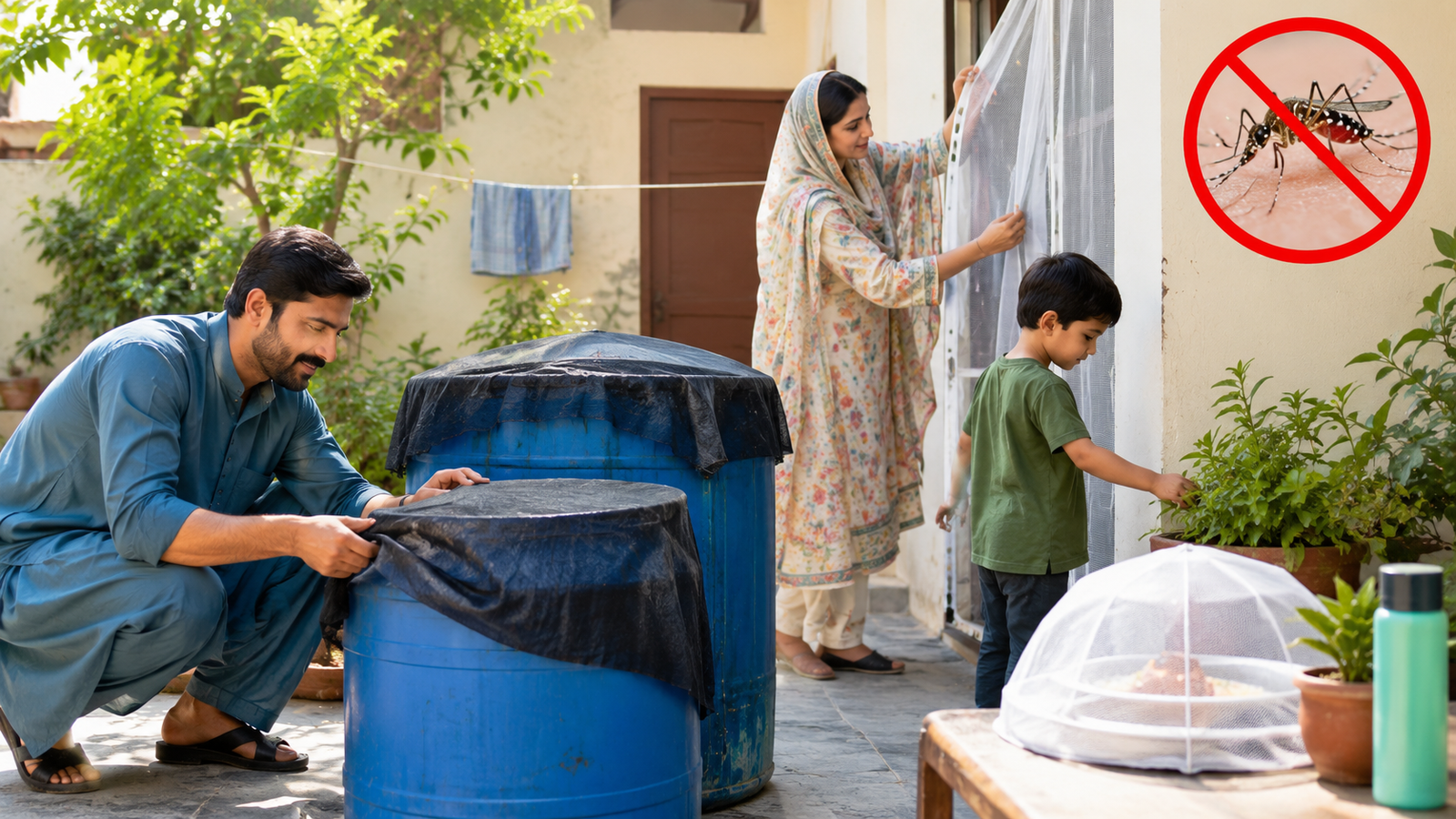
The best dengue prevention strategy is to reduce mosquito bites and eliminate mosquito breeding sites.
Remove Standing Water
Regularly inspect your home and surroundings for containers that can collect water.
Check:
- Buckets
- Flower pots
- Plant trays
- Old tyres
- Bottles
- Cans
- Water containers
- Roof areas
- Open tanks
- Drainage areas
- Any other container capable of holding water
Empty, clean or properly cover water-holding containers.
Pakistan’s NIH recommends eliminating mosquito breeding places and keeping the surrounding environment clean.
Keep Water Tanks Covered
Water tanks and storage containers should be properly covered so mosquitoes cannot enter and lay eggs.
Use Mosquito Screens
Install screens on doors and windows where possible.
WHO recommends using insect screens to help keep dengue-transmitting mosquitoes outside the home.
Use Mosquito Repellent
Apply an appropriate mosquito repellent according to its label instructions.
Wear Protective Clothing
When mosquitoes are active, wear clothing that covers the arms and legs as much as practical.
Use Bed Nets When Appropriate
Bed nets can provide additional protection, particularly for people sleeping during the daytime or in areas without adequate screening or air conditioning.
How to Protect Children From Dengue
Children can also develop dengue, so parents should take mosquito prevention seriously.
Parents can:
- Keep children’s arms and legs covered when practical.
- Use an age-appropriate mosquito repellent according to its instructions.
- Keep windows and doors screened.
- Remove standing water around the house.
- Check children’s symptoms carefully when they have fever.
- Seek medical advice when dengue is suspected.
- Watch closely for warning signs.
Never assume that a child is recovering simply because the fever has decreased.
Dengue Prevention After Rain
Rain can create additional water-holding areas around homes and streets.
After rainfall, inspect the property and remove standing water wherever possible.
Pay particular attention to:
- Rooftops
- Courtyards
- Plant pots
- Empty containers
- Construction areas
- Old tyres
- Open drains
- Water-storage containers
Dengue transmission can increase in conditions that support mosquito breeding, and WHO notes that dengue transmission often follows seasonal patterns associated with rainfall and environmental conditions.
Can Dengue Happen More Than Once?
Yes.
There are four dengue virus serotypes. Infection with one serotype provides lasting immunity to that particular serotype, but protection against the other serotypes is not complete or permanent.
WHO and Pakistan’s NIH note that subsequent infection with another serotype can increase the risk of severe dengue.
This is another reason why people who have previously had dengue should continue taking mosquito-prevention measures.
When Should You Go to the Hospital?
Seek urgent medical care if a person with suspected or confirmed dengue develops:
- Severe abdominal pain
- Persistent vomiting
- Bleeding from the nose or gums
- Blood in vomit or stool
- Difficulty breathing
- Rapid breathing
- Severe weakness
- Confusion or unusual behavior
- Cold or clammy skin
- Signs of shock
- Any rapid deterioration
Severe dengue can cause plasma leakage, severe bleeding, organ impairment and shock. It can be life-threatening and requires urgent medical management.
Frequently Asked Questions About Dengue
How long after a mosquito bite do dengue symptoms appear?
Dengue symptoms commonly appear around 4–10 days after infection, although the exact timing can vary.
Can dengue spread directly from one person to another?
Dengue is primarily transmitted through infected Aedes mosquitoes rather than through ordinary casual contact between people.
Is dengue dangerous?
Many dengue infections are mild, but some can progress to severe dengue, which can cause serious bleeding, shock and organ problems.
Can dengue be treated at home?
Some uncomplicated cases can be managed with supportive care under medical guidance, but patients need appropriate monitoring because severe dengue can develop rapidly.
What is the best way to prevent dengue?
The most effective everyday approach is to prevent mosquito bites and eliminate standing water where Aedes mosquitoes can breed.
Is dengue mosquito active only at night?
No. Aedes mosquitoes that transmit dengue can bite during the daytime as well as other times. Pakistan’s NIH specifically notes daytime activity.
Does a lower fever mean dengue is over?
Not necessarily. The period when the fever begins to fall can coincide with the critical phase of dengue. Warning signs during this period require immediate medical attention.
Final Thoughts
Dengue prevention starts at home. Removing standing water, covering water containers, using mosquito protection and keeping the surroundings clean can reduce mosquito breeding and the risk of infection.
If dengue is suspected, pay attention not only to the fever but also to the patient’s overall condition. Severe abdominal pain, persistent vomiting, bleeding, breathing difficulties, extreme weakness or confusion require urgent medical attention.
The most important message is simple: prevent mosquito bites, eliminate breeding places and never ignore dengue warning signs.
Medical Disclaimer
This article is intended for general health education and awareness. It does not replace examination, diagnosis or treatment by a qualified healthcare professional. If you or a family member has symptoms of dengue or develops warning signs, seek medical advice promptly.
References
- World Health Organization (WHO) — Dengue and Severe Dengue.
- National Institutes of Health (NIH), Pakistan — Public Health Bulletin: Dengue Knowledge Hub.
- National Institutes of Health, Pakistan — Health Education Resources.
- Centers for Disease Control and Prevention (CDC) — Preventing Dengue, updated August 31, 2026.
About the Author


